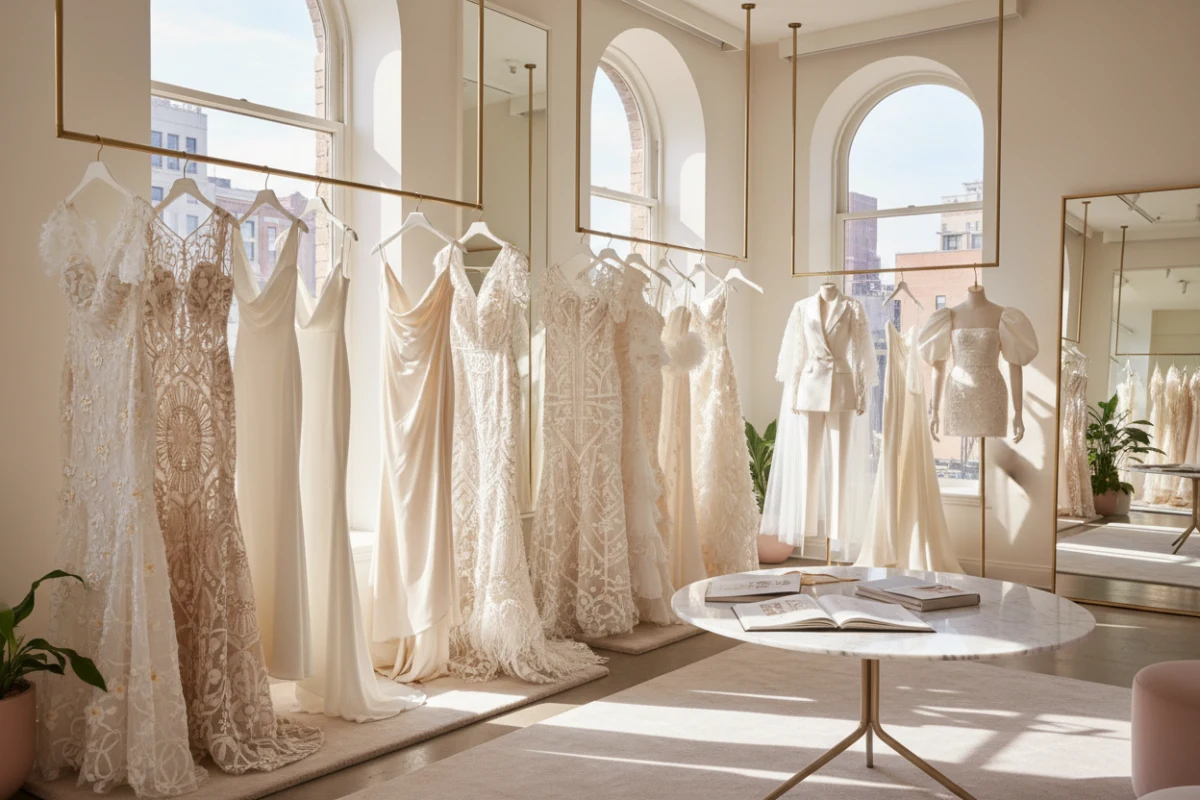
What 2026/2027 Bridal Fashion Trends Should Bridal Boutiques Source for Their Next Collection?
To maximize fitting-room conversions for the 2026/2027 season, bridal boutique buyers should curate a balanced inventory featuring high-conversion structural minimalism (40% sample share), customizable modular elements (30%), and statement textural romanticism (30%) tailored to specific regional preferences. This strategic distribution ensures shops satisfy diverse modern brides while maximizing inventory turnover.
How should boutique owners allocate their sample budget for the 2026/2027 season?
Successful bridal boutique inventory planning 2026 requires moving away from emotional buying and focusing on data-driven sample curation. Boutiques must diversify their inventory across three primary design pillars to ensure high conversion rates in the fitting room. Allocating budget based on these categories mitigates the risk of dead inventory.
| Trend Category | Recommended Sample Share | Target Bride Persona | Key Silhouettes to Source |
|---|---|---|---|
| Structural Minimalism | 40% | The Modernist, Classic Elegance | Architectural A-lines, sleek column gowns, structured ballgowns |
| Modular & Customizable | 30% | The Experiential, Budget-Conscious | Convertible sheaths, detachable overskirts, interchangeable sleeves |
| Textural Romanticism | 30% | The Whimsical, Statement-Maker | 3D floral A-lines, textured tulle, dramatic laser-cut lace |
By following this structured sample allocation, bridal store owners can cater to the majority of walk-ins while carrying enough showstoppers to capture attention on social media.
Why is Structural Minimalism the anchor trend for 2026/2027 collections?
Minimalism continues to dominate the bridal market, but the 2026/2027 season shifts focus from ultra-plain fabrics to structured, architectural forms. These trending wedding dresses for bridal shops rely on heavy-weight crepe, silk mikado, and structured satin to create dramatic shapes without relying on lace or beadwork.
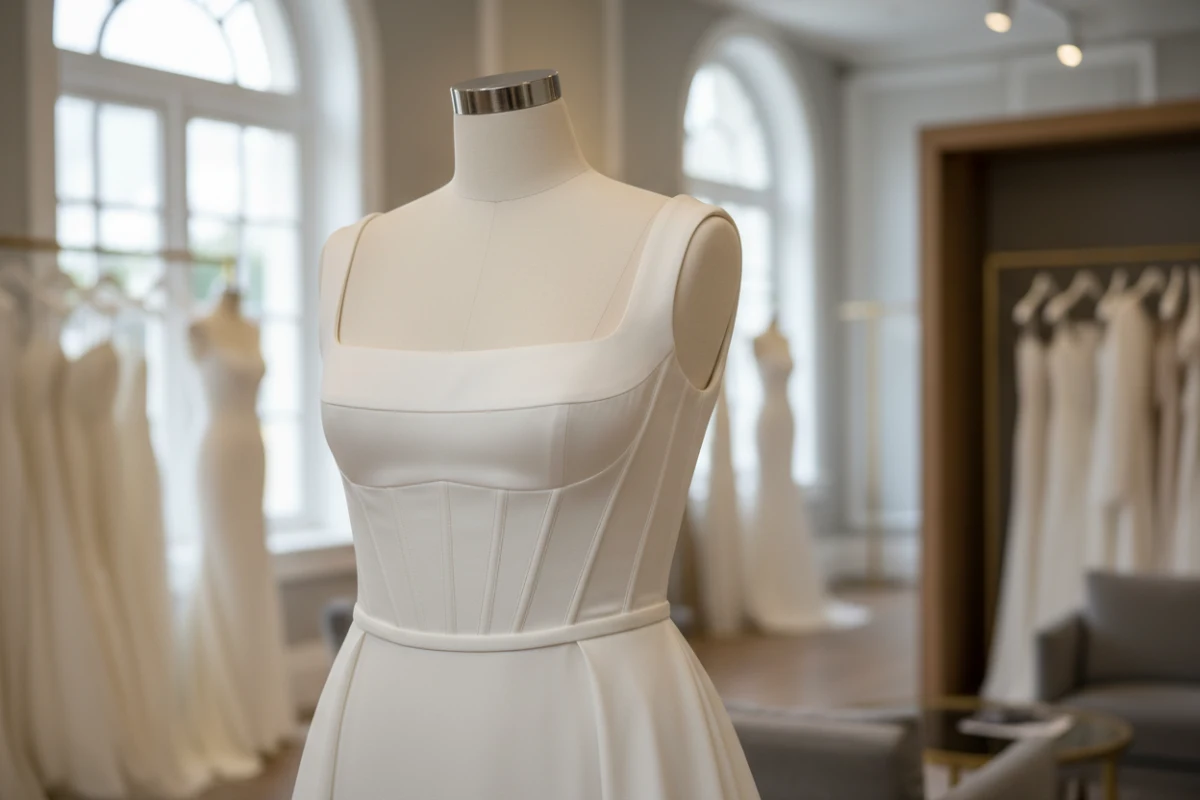 Structural minimalism remains a dominant, high-conversion category for 2026/2027 brides.
Key details to source within this category include:
- Internal Corsetry: Brides are demanding built-in shapewear and exposed boning that offer both physical support and visual structure.
- Sculptural Necklines: Look for square necks, asymmetric wraps, and high-neck halter styles that frame the face beautifully.
- Pleating & Draping: Strategic gathers at the waist and hip offer a flattering silhouette, driving higher conversion rates during try-ons.
These clean canvases are highly popular because they allow brides to accessorize heavily, making them an easy, low-risk sell for boutique stylists.
How do modular elements drive sales in 2026/2027 bridal fashion trends to source?
Modern brides demand versatility. With many hosting multi-event weddings (welcome drinks, ceremony, reception, afterparty), they want multiple looks without buying multiple dresses. Sourcing modular elements is the most cost-effective way for bridal stores to offer "two-in-one" or "three-in-one" looks.
When reviewing 2026 2027 bridal fashion trends to source, focus on these customizable options:
- Detachable Capes & Watteau Trains: These add drama for the ceremony walk and can be easily removed for the reception.
- Transformative Sleeves: Sourcing puff sleeves, off-the-shoulder straps, and long lace sleeves that attach via hidden snaps allows brides to personalize their look.
- Over-skirts and Removable Minis: A full ballgown skirt that detaches to reveal a sleek sheath underneath remains a top seller.
Integrating modular styles into your bridal fashion trends sample selection increases the perceived value of each gown, allowing your sales team to upsell accessories and customization packages effortlessly.
What role do bold textures and contemporary romanticism play in next season's inventory?
While minimalism anchors the inventory, textural romanticism brings the emotional "wow" factor that draws brides into the store. In 2026 and 2027, romance is defined by tactile depth rather than traditional flat lace.
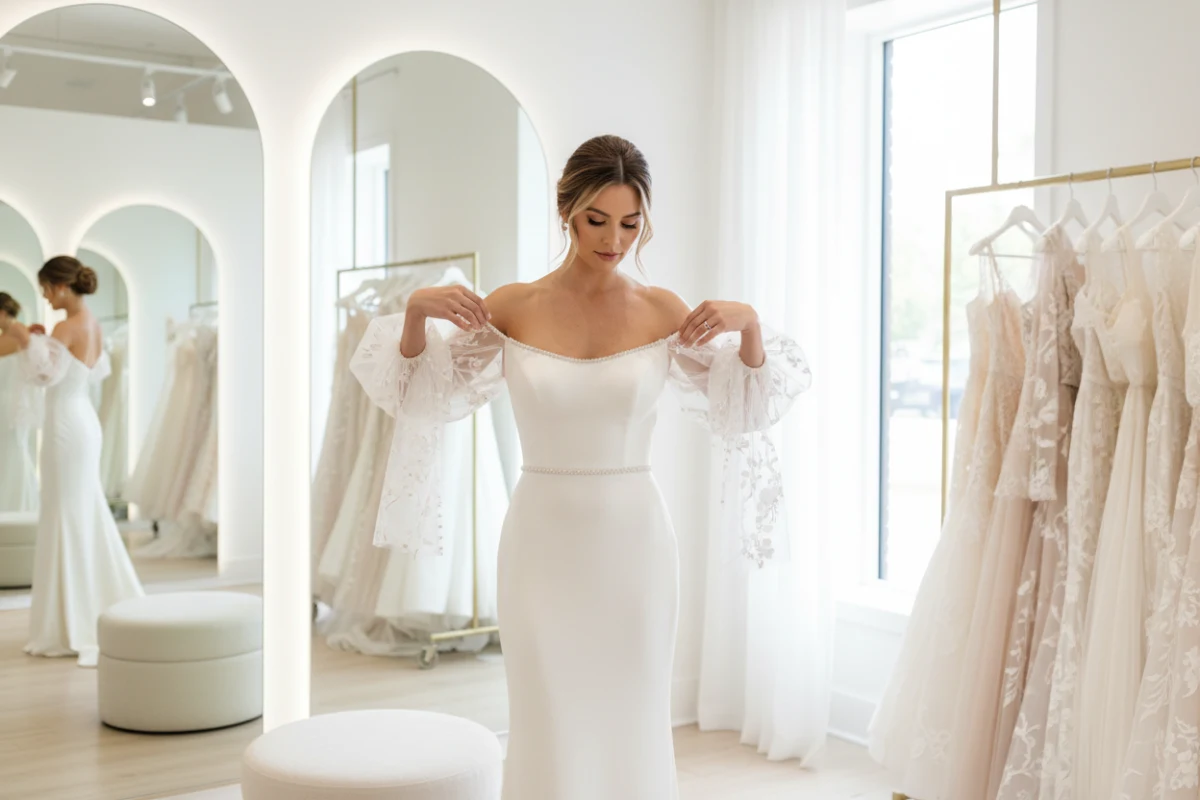 Modular and detachable elements provide high-value customization for modern experiential brides.
Boutiques should source gowns featuring:
- 3D Floral Appliqués: Oversized, laser-cut flowers that appear to grow along the bodice and cascade down the skirt.
- Textured Tulle & Organza: Plissé pleating, ruffled tiers, and flocked Swiss dot patterns that add volume without heavy weight.
- Subtle Color Undertones: Move beyond traditional ivory. Source samples with soft undertones of champagne, peach fuzz, blush, and dusty lavender to capture the adventurous bride.
These romantic gowns serve as excellent window-display pieces and drive high organic engagement on Instagram and TikTok, drawing new brides to book appointments.
How do regional demographic preferences impact your buying guide for bridal store owners?
Your geographic location should heavily dictate your buying choices. A successful buying guide for bridal store owners must translate global trends into local market preferences to avoid slow-moving inventory.
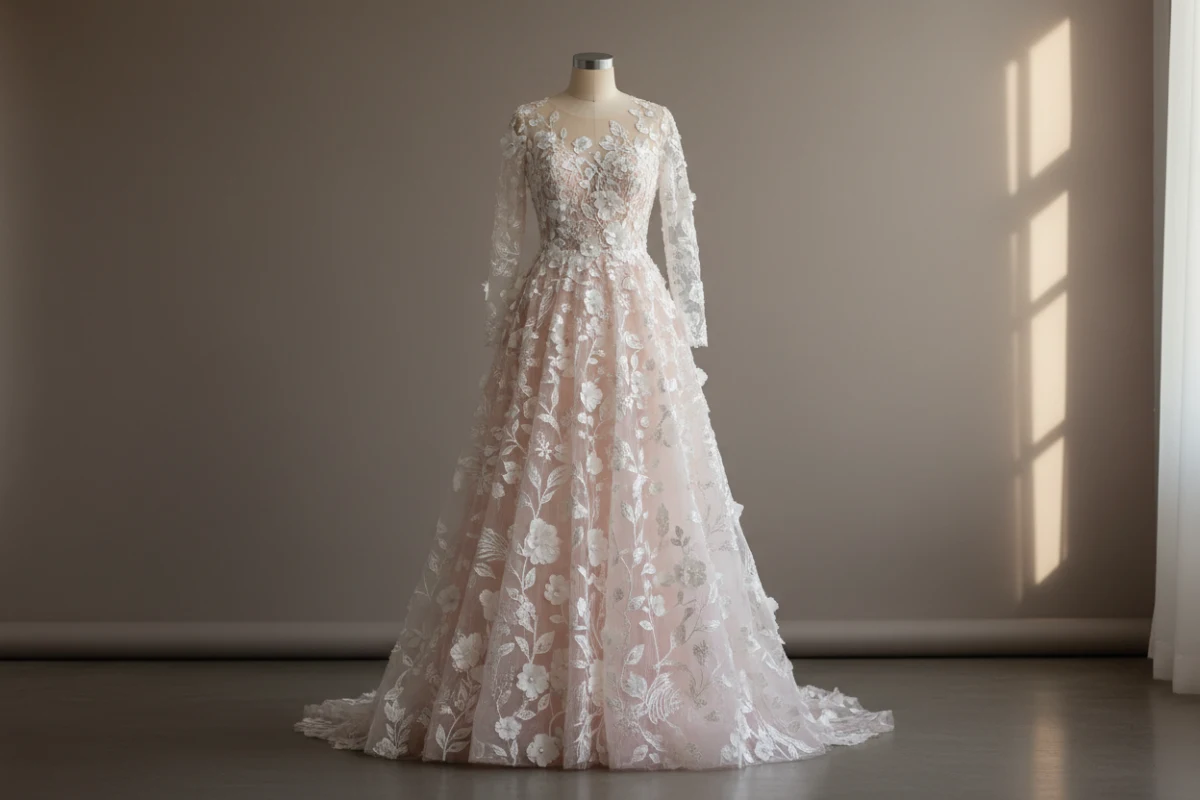 Bold textures and contemporary romantic elements create dramatic visual impact in fitting rooms.
- United States Market: US brides favor high-glamour, defined silhouettes (mermaid and dramatic A-lines) with ample sparkle and transformable elements. Prioritize modular gowns and statement trains.
- United Kingdom Market: UK brides often prefer a mix of relaxed elegance and refined lace, influenced by micro-weddings and countryside venues. Focus on lightweight, comfortable A-lines and soft, organic laces.
- European Union Market: EU brides lean toward high-fashion, clean, architectural cuts and eco-conscious, sustainable fabrics. Prioritize structural minimalism and recycled crepe or organic silk samples.
Ready to elevate your boutique's inventory with the most sought-after styles of the upcoming season? View 2026/2027 Collection to explore our highly curated, high-conversion wholesale bridal designs designed specifically for retail success.