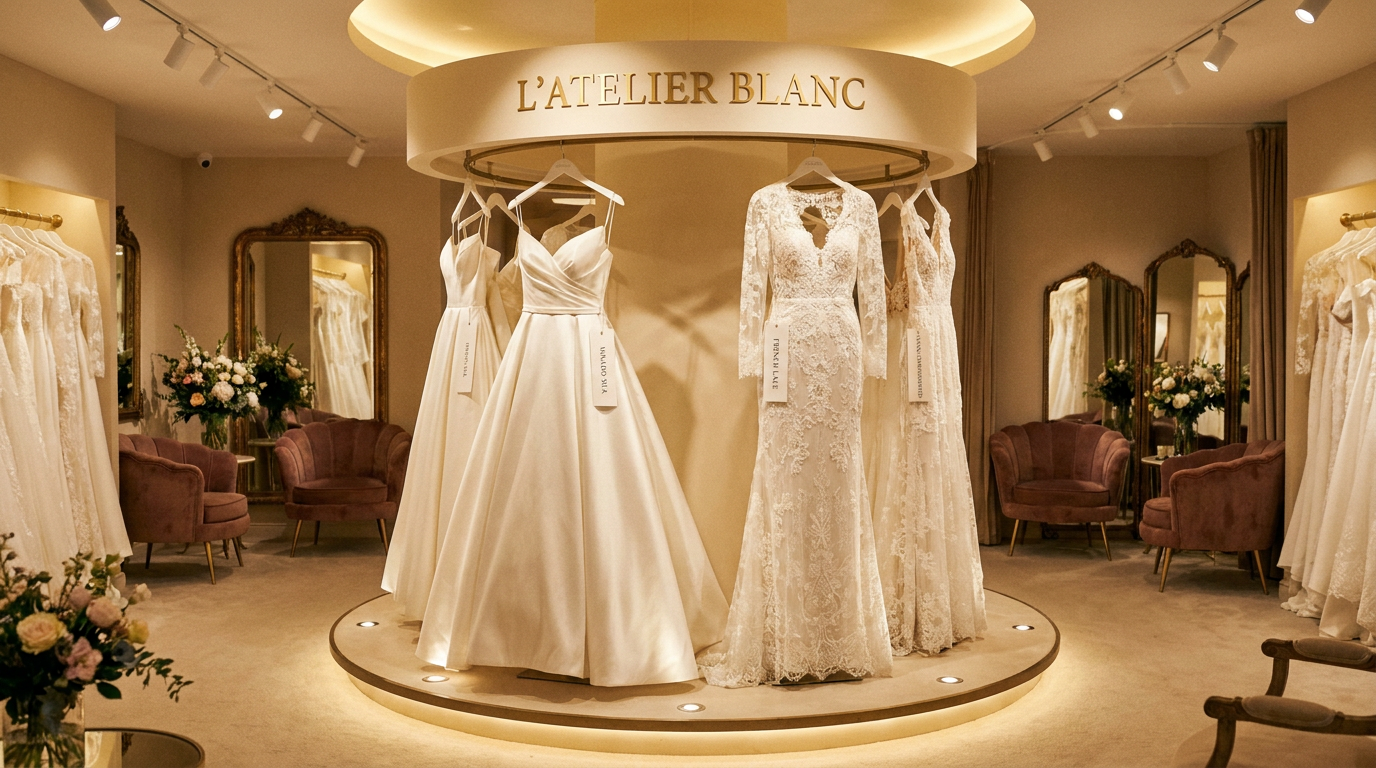
How Bridal Retailers Can Balance Designer Brands and Private Label Collections
I remember sitting with a boutique owner in Chicago last fall. She was exhausted. Her shop was busy, her appointments were full, but at the end of the month, the math just wasn't mathing. She was paying premium licensing fees to big-name designers, dealing with strict territory rules, and watching her margins get squeezed by inflation. She felt like she was working for the designers, not for herself.
If that sounds familiar, you’re not alone. In 2026, the bridal market has shifted. We’re seeing the rise of 'Quiet Luxury 2.0' and 'Intentional Buying.' Brides aren't just looking for a label anymore; they are looking for fabric integrity, architectural minimalism, and a story they can believe in. This is where the magic of balancing designer brands with private label collections comes in.
The 2026 Bridal Retail Dilemma: The Squeeze on Traditional Margins
For years, the industry relied on the 'Designer Magnet' model. You bring in a big name, they spend millions on marketing, and the brides walk through your door. But here’s the catch: everyone else within a 50-mile radius has that same dress. Brides are savvy. They’ll price-shop you on their phones while standing in your fitting room.
When you factor in the rising costs of samples and the pressure to meet high minimums, your net profit on a designer gown can be surprisingly slim. That’s why the most successful retailers I work with at Huasha Bridal are pivoting. They are no longer just 'shops'; they are becoming 'curators.'
Magnets vs. Engines: Defining the Strategic Roles
I like to think of a boutique’s inventory in two categories: Magnets and Engines.
Designer Brands are your Magnets. They drive the SEO, the social media buzz, and the initial appointment bookings. They give your store credibility. You need them.
Private Labels are your Engines. These are the gowns that actually drive your profit home. When you source a high-quality white-label collection—like the ones we’ve spent 18 years perfecting here in Suzhou—you aren't just buying a dress; you're buying exclusivity. You can't be price-matched on a gown that only exists in your store. Your margins on these pieces can reach 60-70%, compared to the much lower returns on big-name brands.
The 70/30 Framework: How to Curate a Resilient Gown Portfolio
So, how do you find the sweet spot? After nearly two decades in manufacturing and consulting with boutiques across the US, I’ve found that the '70/30 Rule' is the gold standard for 2026.
Why 70/30?
- 70% Proven Bestsellers: This includes your essential designer staples and your 'bread and butter' private label styles. These are the silhouettes you know will sell: the clean A-lines, the perfect fit-and-flares, and the classic ballgowns.
- 30% Exclusive House-Label Showstoppers: This is where you get creative. Use your private label partner to create 'un-googlable' pieces. Think modular designs—dresses with detachable sleeves or overskirts. These allow one base gown to serve as multiple SKUs, maximizing your floor-space ROI.
Building Your House Label: Sourcing Excellence from Suzhou
I often hear boutique owners worry that 'private label' means 'lower quality.' That couldn't be further from the truth if you partner with the right factory. At Huasha Bridal, we treat our white-label production with the same—if not more—intensity as our high-end ODM projects.
When building your house label, prioritize 'Engineering Over Aesthetics.' A dress can look beautiful on a hanger, but if the internal corsetry is weak or the fabric feels thin, the bride will know the second she puts it on. We use 300g Mikado and high-grade internal structures because we know that 'Intentional Brides' value construction.
Marketing Exclusivity: Selling the Story, Not the Label
How do you explain a non-designer gown to a bride who came in wanting a big name? It’s all about the narrative.
Instead of saying, 'This is our house brand,' try saying, 'This is part of our Curated Signature Collection. We worked directly with a master manufacturer to ensure the highest quality silk and a fit you won't find anywhere else.' You aren't selling a 'no-name' dress; you're selling an exclusive piece of art that you’ve personally vetted for its superior craftsmanship.
Risk Management: Quality Control and Lead Times
I get it—sourcing from China can feel risky. I’ve seen the horror stories of yellowed lace and six-month delays. That’s why transparency is our obsession at Huasha. We use AQL (Acceptable Quality Level) standards and offer digital-first collaboration.
Before you commit to a bulk order for your private label, we always suggest a small-batch test. We even encourage our partners to hop on a WhatsApp video call for a virtual tour of our Suzhou facility. Seeing the artisans work on the beadwork in real-time builds a level of trust that a catalog never could.
Conclusion: From Shop Owner to Collection Curator
Balancing designer brands and private labels isn't about choosing one over the other. It’s about building a business that is both prestigious and profitable. By using designer names to bring brides in and your own exclusive collections to secure your margins, you protect your territory and your bottom line.
If you're ready to stop being squeezed by designer fees and start building your own legacy, let’s talk. I’d love to show you how our 18 years of experience can help you create a collection that your brides—and your bank account—will love. Reach out for a virtual tour of our showroom today.