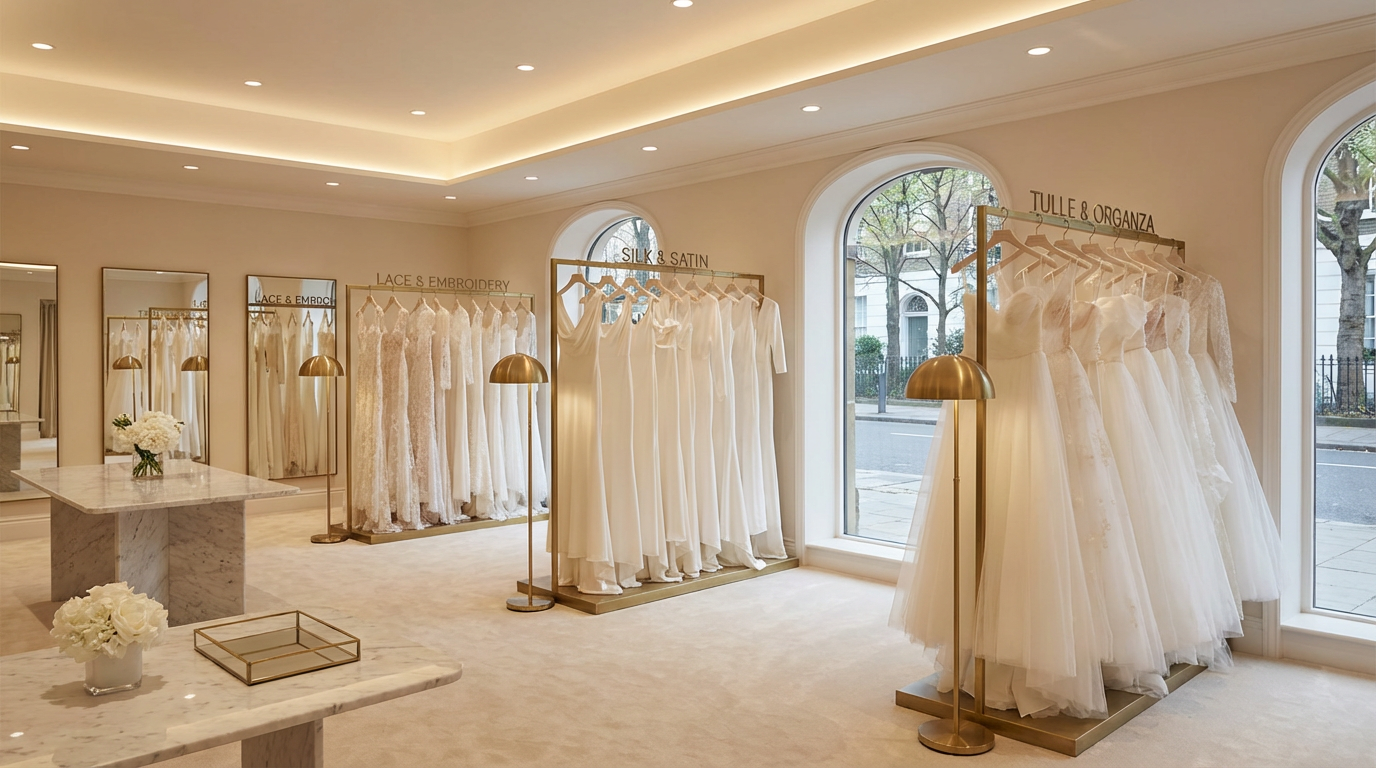
The Buyer’s Guide to Fabric Stories: How to Build Variety Without Rack Confusion
I remember visiting a beautiful boutique in Chicago a few years back. The owner, a sharp woman named Sarah, was frustrated. She had sixty stunning gowns on her racks, but her brides were overwhelmed. They’d flip through the hangers for five minutes and say, "Everything looks the same," or "I don't even know where to start."
That’s what we call Rack Confusion. It happens when a buyer selects dresses based on individual beauty rather than a cohesive narrative.
After 18 years here at Huasha Bridal in Suzhou, managing production for some of the world’s most successful labels, I’ve seen that the most profitable shops don't just buy dresses—they curate Fabric Stories.
Let’s dive into how you can use the psychology of fabric to organize your shop and make the sale easier for your stylists and your brides.
What Exactly is a "Fabric Story"?
Think of a fabric story as a persona. Instead of looking at a rack and seeing "Dress A" and "Dress B," your bride should see "The Modernist," "The Romantic," or "The Dreamer."
When you group your inventory by fabric, you create visual anchors. It allows a bride to say, "I love the way this feels," and suddenly, her choices are narrowed down from sixty dresses to the six that fit her tactile preference. As a manufacturer, we see this work wonders for our ODM partners who want to build a brand identity that feels intentional, not accidental.
The Three Pillars of a Balanced Collection
To avoid a messy rack, I always recommend my partners follow a 70/30 rule: 70% of your inventory should be built around three core fabric stories, and 30% should be reserved for trend-driven "wildcards."
1. The Modernist (Crepe & Mikado)
This story is all about structure, clean lines, and that "expensive" minimalist look.
- The Feel: Heavy, supportive, and buttery smooth.
- The Bride: She wants a timeless, architectural look. Think Carolyn Bessette-Kennedy.
- Manufacturing Tip: At Huasha, we focus on high-GSM (grams per square meter) fabrics for this story. If the crepe is too thin, it shows every lump and bump. Our 18 years of experience has taught us exactly which polyester-blend crepes offer the look of silk without the $5,000 price tag.
2. The Romantic (Lace & Texture)
This is the bread and butter of bridal, but it’s where confusion happens most easily.
- The Feel: Intricate, layered, and three-dimensional.
- The Bride: She’s traditional but wants a touch of whimsy. She loves detail.
- The Strategy: Don't just buy "lace dresses." Buy a Chantilly story (soft, flat, vintage) and a 3D Floral story (bold, modern, textured). Separating these on your racks helps the bride distinguish between "classic" and "boho."
3. The Dreamer (Tulle & Organza)
This is your volume story.
- The Feel: Airy, light, and ethereal.
- The Bride: She wants the "princess moment" without the weight.
- Pro Tip: Watch your shades of white. One of the biggest risks of sourcing from multiple factories is that your "Ivory" tulle won't match your "Ivory" satin. Because we manage the entire supply chain here in Suzhou, we ensure dye-lot consistency across different fabric types so your rack looks uniform.
The Buyer’s Matrix: How to Order
When you’re looking at our catalog or working on a white-label project with us, don't just pick the ten prettiest dresses. Use a matrix.
If you are buying 20 new styles, try this breakdown:
- 5 Gowns in Heavy Satin/Mikado (The Clean Story)
- 5 Gowns in Stretch Crepe (The Minimalist Story)
- 6 Gowns in Lace/Appliqué (The Texture Story)
- 4 Gowns in Tulle/Organza (The Volume Story)
This variety ensures that no matter who walks through your door, you have a "story" that resonates with them. It also makes your Instagram feed look curated and professional rather than cluttered.
Why Consistency is Your Best Friend
I’ve seen boutique owners lose sales because the sample they ordered six months ago feels different from the one that just arrived for a bride. This is why we take Quality Control (QC) so seriously at Huasha Bridal.
We use standardized AQL (Acceptable Quality Level) testing for every batch of fabric. We check for seam slippage in crepes and bead-loss in laces. When you source from a strategic partner rather than a random wholesaler, you’re buying peace of mind. You’re ensuring that the "Fabric Story" you tell on your sales floor is the same one the bride receives on her wedding day.
Merchandising for Success
Once the dresses arrive from our factory to your shop, how you hang them matters.
- Group by Fabric, then Silhouette: Don't mix your heavy Mikado ballgowns with your light tulle A-lines. Group all the Mikados together. It creates a powerful visual block of color and texture that feels high-end.
- Use Fabric Education: Train your stylists. Don't just say "this is a pretty dress." Teach them to say, "This is a high-weight Italian-style crepe that provides incredible natural contouring." Brides love expertise.
Let’s Build Your Story Together
Building a collection that sells is both an art and a science. You bring the vision of what your local brides want, and I bring the 18 years of technical expertise to make it happen without the headaches of production delays or quality issues.
If you're tired of rack confusion and want to see how we can help you curate a cohesive, high-margin collection, let’s talk. I’d love to show you around our Suzhou facility via a WhatsApp video call. You can see our latest fabric arrivals, watch our QC process in action, and see the craftsmanship that goes into every Huasha gown.
Ready to elevate your inventory? Contact us today and let’s start crafting your brand’s next fabric story.