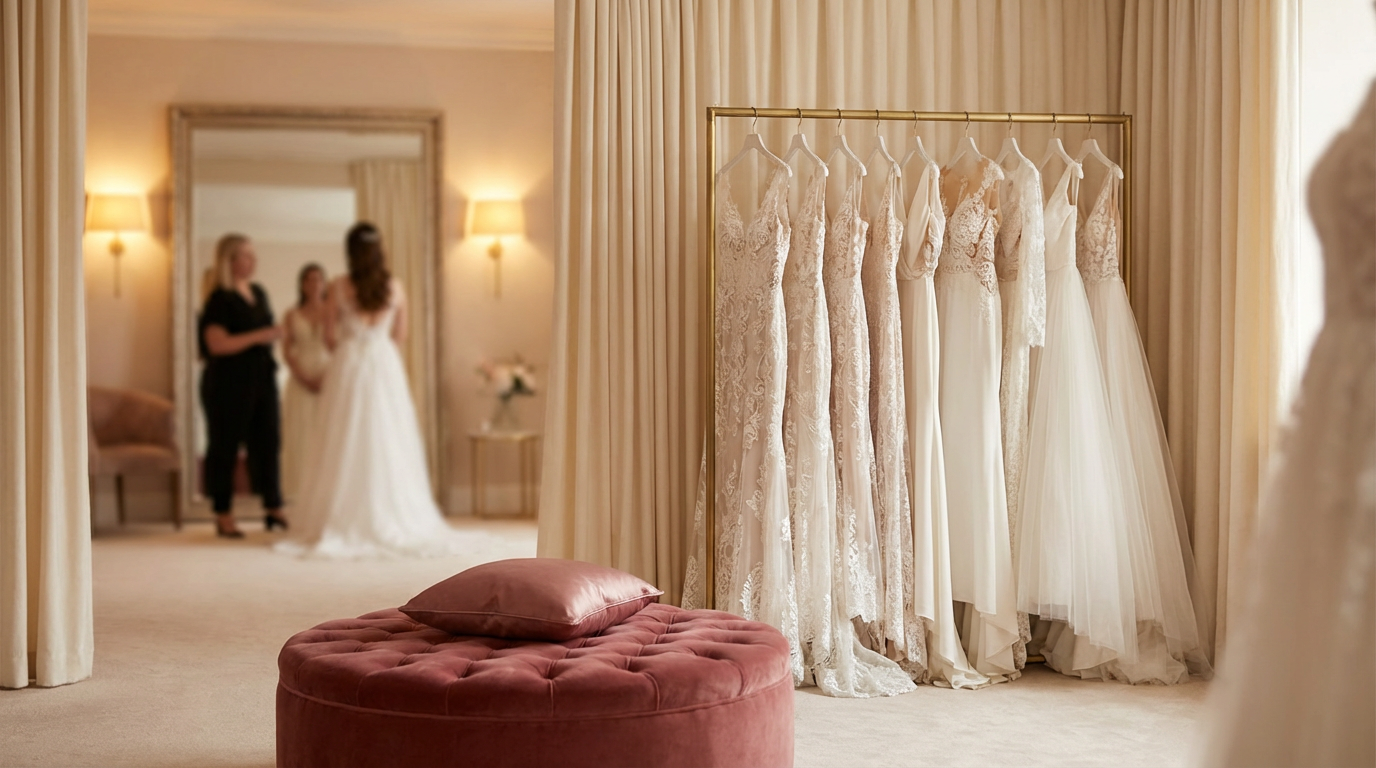
How Sample Size Strategy Affects Conversion in the Bridal Fitting Room
I remember a specific Tuesday afternoon a few years back. I was visiting one of our long-term boutique partners in Chicago. A bride-to-be walked in—radiant, excited, and clearly a beautiful US size 18. She had her heart set on a delicate A-line gown from our latest collection.
The problem? The boutique only had the sample in a size 10.
I watched as the stylist tried every trick in the book. Modesty panels, heavy-duty clips, even a bit of creative draping. But the bride’s face fell. She didn’t see a queen in the mirror; she saw a woman squeezed into a garment that wasn't made for her. That sale—and more importantly, that bride's confidence—evaporated in minutes.
At Huasha Bridal, we’ve spent 18 years in the trenches of bridal manufacturing. We don't just see the sketches; we see the data. And the data is clear: your sample size strategy is the single most important factor in your fitting room conversion rate.
The Psychology of the Fitting Room: Why Fit Equals 'Yes'
Buying a wedding dress is the most emotional purchase a woman will ever make. When a bride enters your fitting room, she isn't just looking for fabric; she's looking for a feeling.
If a dress fits—or at least comes close to fitting—the bride can visualize her wedding day. Her posture changes. She smiles. That’s the 'Yes' moment. When the size gap is too wide, the 'Standard Size Trap' kicks in. Clipping a size 10 onto a size 18 bride doesn't just look bad; it creates a psychological barrier. She feels like an outsider in the world of bridal beauty.
In my experience managing production at Huasha, I’ve seen that boutiques focusing on a 'near-perfect' fit during the initial try-on see their conversion rates jump from a stagnant 30% to a thriving 70%.
Data Breakdown: How Mismatch Kills Your ROI
Let’s talk numbers, shop owner to manufacturer. If you are stocking only size 10s and 12s, you are effectively ignoring over 50% of the US market.
- The Industry Average: Most salons convert about 1 in 3 appointments.
- The High-Performers: Salons with a dedicated 'Curve' or inclusive sample range often convert 2 out of 3.
Why? Because they reduce 'clipping fatigue.' When a bride doesn't have to imagine what the back of the dress looks like because it actually zips, the friction to purchase disappears.
The 'Inclusive' Advantage: More Than Just a Trend
Size inclusivity isn't a buzzword anymore; it’s a core requirement for a profitable business in 2026. I’ve helped dozens of our partners transition to what I call the 'Core & Curve' Strategy.
Instead of buying one of everything in a size 10, we help them curate a selection where their best-sellers are stocked in both a mid-range (size 12) and a curve range (size 20 or 22). This ensures that no matter who walks through the door, you have something that makes them feel celebrated, not tolerated.
Inventory Engineering: Finding the Sweet Spot
I know what you’re thinking: 'I can’t afford to double my inventory.'
You don’t have to. Inventory engineering is about being smart, not just being big.
- Identify Your 'Power Silhouettes': For hard-to-fit styles like mermaids or fitted sheaths, you need more size variety. An A-line is more forgiving; a mermaid is not.
- Bridge Sizes: Use sizes 14 and 16 as 'bridge' samples. They are easier to clip down for smaller brides and easier to panel up for larger ones.
- Rotate Dead Stock: If a sample hasn't been tried on in three months, it’s dead weight. Move it to a sample sale and reinvest that capital into a size range you’re currently missing.
The Manufacturer Connection: Why Your Partner Matters
This is where we come in. As a strategic manufacturing partner, Huasha Bridal doesn't just ship you boxes of dresses. We work with you to understand your demographic.
Our patterns are developed specifically for the US market. We understand that a US size 20 isn't just a 'blown up' size 10. It requires different bone placement, reinforced straps, and adjusted cup proportions. When you source from a factory that understands the technical side of inclusive sizing, your samples last longer and fit better.
Conclusion: Turning Your Fitting Room into a Profit Center
Your fitting room should be a place of magic, not math. By diversifying your sample sizes, you’re telling every bride she is welcome. And a welcome bride is a buying bride.
If you’re ready to stop losing sales to the 'Standard Size Trap,' let’s talk. I’d love to hop on a WhatsApp video call and show you how we’re constructing our latest curve collection right here in our Suzhou facility.
Ready to optimize your inventory? [Contact Huasha Bridal today] and let’s build a collection that converts.