How to Source Bridal Gowns for the U.S. Market That Actually Meet Client Expectations
Let’s be honest: sourcing bridal gowns from halfway across the world can feel a bit like a high-stakes gamble. I’ve sat across from dozens of boutique owners who came to me after a "disaster shipment" from another supplier—dresses that looked nothing like the photos, zippers that popped at the first tug, and sizing that seemed designed for a different species entirely.
I’m here to tell you it doesn’t have to be that way. With 18 years of experience here at Huasha Bridal in Suzhou, I’ve seen the industry evolve from simple mass production to the sophisticated, strategic manufacturing partnerships we lead today. If you want to scale your bridal brand in the U.S., you need more than a vendor; you need a partner who understands the nuances of the American bride.
Why Sourcing for the U.S. Market is Different
The U.S. bridal market is unique. Unlike some markets where "good enough" passes, the American bride expects a specific level of structural integrity and a wide range of inclusivity. When you're sourcing, you aren't just buying a dress; you're buying the trust your client places in you for the most important day of her life.
1. Decoding the "U.S. Fit": Beyond Just Measurements
One of the biggest hurdles I see is the "Asian-fit" bias in patterns. A U.S. size 8 is not just a larger version of a size 2. It requires different proportions, especially in the bust-to-waist ratio and the length of the torso.
At Huasha, we use standardized U.S. grading rules (Sizes 0–28). We ensure that our plus-size patterns aren't just scaled up, but re-engineered with additional support. When you’re vetting a factory, ask them: "Do you use separate blocks for your plus-size range?" If the answer is no, your curvy brides are going to have a hard time in the fitting room.
2. Fabric Mastery: Choosing Materials That Feel Expensive
In the era of "Quiet Luxury," the hand-feel of a fabric is everything. A dress can look stunning in a photo, but if it feels like cheap polyester to the touch, the sale is lost.
- Mikado & Crepe: These are currently dominating the U.S. market. A high-quality Mikado should have a structured, architectural drape without being heavy or "plastic-y."
- The Stretch Factor: Many modern brides want comfort. We’ve seen a massive surge in demand for high-grade stretch crepes that offer a sleek silhouette while allowing the bride to actually dance.
- Authenticity: I always recommend my partners request physical swatches. Don't rely on a screen. You need to feel the weight (GSM) and see how the light hits the weave.
3. The Architecture of a Gown: What’s Under the Lace
This is where most "budget" factories cut corners. A gown that meets U.S. expectations must have a solid internal structure. We’re talking about:
- Boning: We use a mix of Rigilene and steel boning depending on the silhouette to ensure the bodice doesn't collapse.
- Inner Belts: A standard feature in our high-end ODM pieces, an inner waist belt shifts the weight of a heavy skirt from the shoulders to the waist, making the dress much more comfortable.
- Zipper Quality: There is nothing worse than a zipper failing five minutes before the ceremony. We stick to YKK or equivalent high-reliability closures.
4. Navigating the "Suzhou Connection" Without the Stress
Suzhou is the heart of global bridal manufacturing, but the sheer number of factories can be overwhelming. The difference between a "trading company" and a "strategic manufacturer" like Huasha Bridal is transparency.
We operate as a white-label and ODM partner. This means we don't just take an order; we consult on the design. If a lace pattern you've chosen is going to be too scratchy under the arms, I’ll tell you. If a train is too heavy for the bustle you want, we'll fix it in the sample stage. This proactive communication is how we've maintained zero quality issues for our long-term partners.
5. Quality Control: The Three-Stage Process
You shouldn't wait until the boxes arrive at your boutique to see the quality. We implement a rigorous three-stage QC process:
- Pre-production: Fabric and lace approval.
- In-line: Checking the internal structure before the lining is closed.
- Final Inspection: AQL standards for every bead, seam, and zipper.
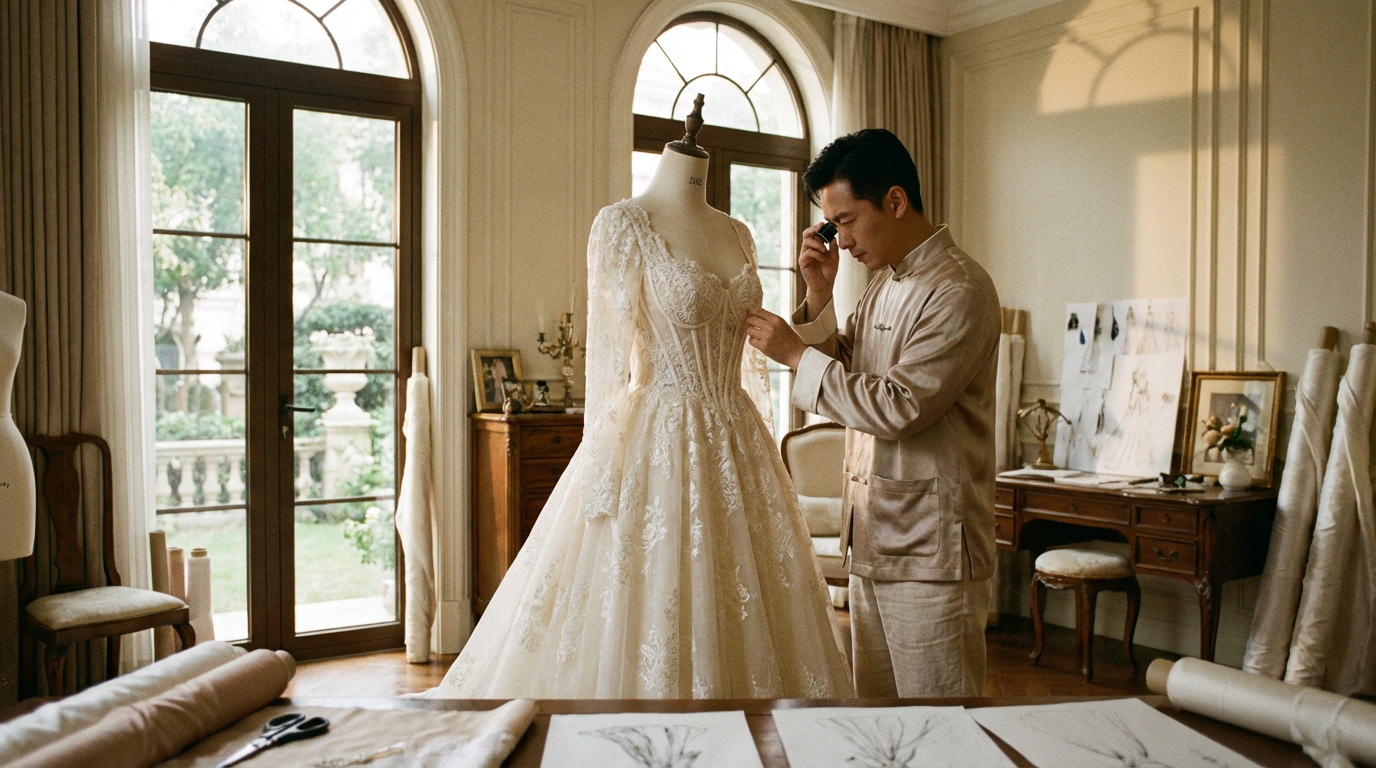
Pro Tip: I always encourage our clients to hop on a WhatsApp video call. I’ll walk you through the factory floor and show you your order on the mannequins in real-time. It’s the next best thing to being here in Suzhou.
6. Lead Times and the "Wedding Gap"
Logistics can make or break a season. Currently, we recommend a 6-month buffer. This allows 3-4 months for meticulous production and 1-2 months for shipping and any local U.S. alterations. We help our partners plan their inventory cycles to avoid the "rush fee" trap and ensure they always have fresh styles for the peak engagement season.
Final Thoughts: Your Partnership is Your Competitive Edge
Sourcing from China doesn't have to be a risk. When you align with a factory that understands the U.S. market's demand for quality, fit, and reliability, you stop worrying about production and start focusing on growth.
At Huasha Bridal, we turn complex production needs into clear, reliable solutions. Ready to see the difference 18 years of expertise makes? Let’s jump on a call and talk about your next collection.
[Contact us today to schedule a virtual factory tour via WhatsApp!]