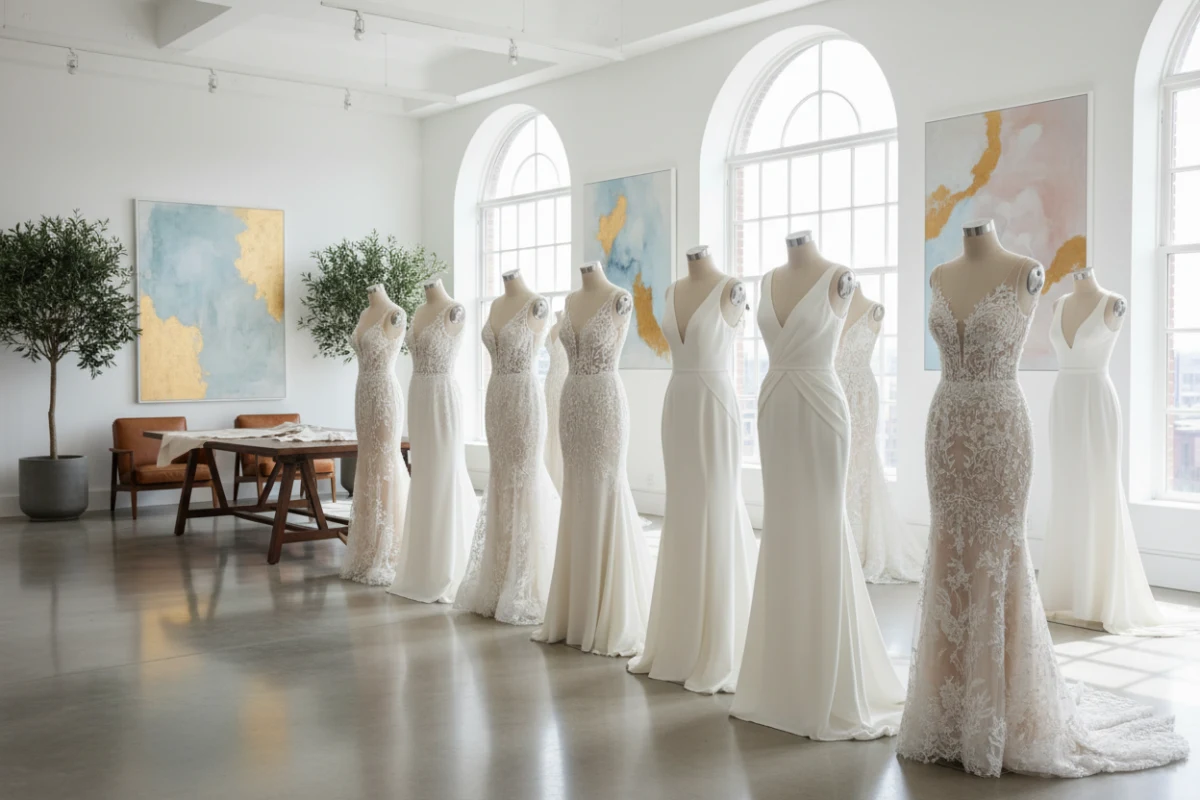
How to Scale Your Bridal Brand with an OEM Wedding Dress Manufacturer
Scaling Your Bridal Brand with a Professional OEM Wedding Dress Manufacturer
Partnering with a professional OEM wedding dress manufacturer allows bridal brands to seamlessly transform design concepts into high-quality, market-ready gowns through a structured workflow of tech pack translation, custom sourcing, sampling, and consistent bulk production.
For independent designers, boutique owners, and global bridal labels alike, scaling a business in the luxury bridal sector presents unique manufacturing challenges. The intricate craftsmanship, high fabric costs, and demanding quality expectations leave very little room for error. Working with a dedicated OEM (Original Equipment Manufacturer) partner ensures your creative vision is executed with absolute precision, allowing you to focus on branding, marketing, and client relationships.
The Strategic Value of an OEM Wedding Dress Manufacturer
When a bridal brand enters the competitive market, one of the most critical decisions is determining how and where the gowns will be produced. Attempting to manage an in-house atelier can limit scalability and drastically increase operational overhead. By outsourcing production to an experienced OEM wedding dress manufacturer, brands gain access to industrial-grade tailoring equipment, specialized artisan workforces, and sophisticated supply chains.
Choosing to work with a reputable private label wedding dress manufacturer also allows you to retain complete ownership over your designs while utilizing the manufacturer's established infrastructure. This partnership provides several key advantages:
- Reduced Capital Investment: You do not need to invest in heavy cutting machinery, specialized embroidery equipment, or physical studio spaces.
- Lower Labor Costs: Access highly trained seamstresses and hand-beading artisans who specialize in delicate bridal laces and structural boning.
- Fast-Track Scaling: Seamlessly transition from a handful of couture pieces to larger collections designed for global distribution.
Phase 1: Translating Your Vision into a Complete Tech Pack
Every masterpiece begins with a blueprint. In the bridal manufacturing world, this blueprint is known as a "tech pack." A tech pack details everything from garment dimensions and stitching preferences to raw material requirements and closure specifications.
If you do not have a fully realized tech pack, a premier custom wedding gown factory will guide you through the translation phase. Designers often submit hand-drawn sketches or digital CAD designs. The manufacturing team then reverse-engineers these concepts into precise pattern templates, ensuring that the silhouette, drape, and structural support of the gown can be replicated consistently during bulk manufacturing.
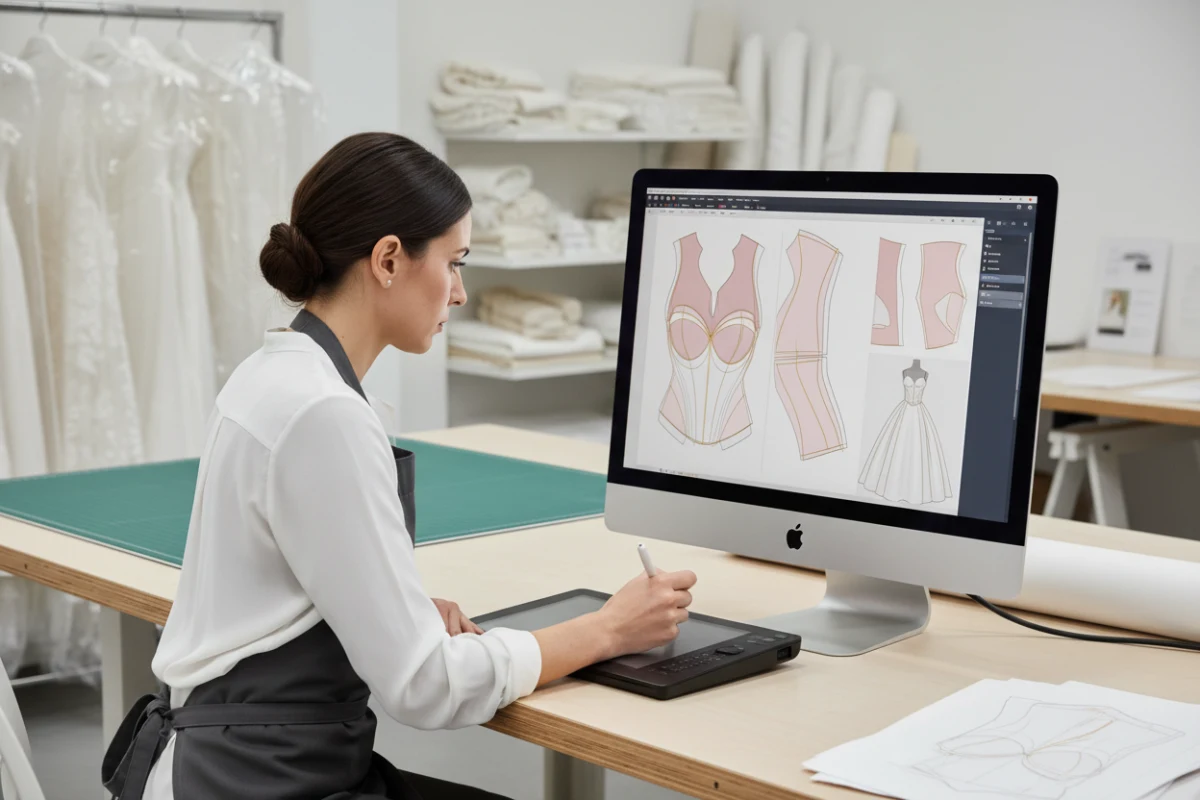 Translating design sketches into a production-ready tech pack is the essential first phase of OEM bridal manufacturing.
Phase 2: Custom Material Sourcing and Embellishment Selection
Bridal wear is defined by the quality of its textiles and details. From rich silk satins and weightless tulles to intricate French chantilly lace, selecting the right materials is crucial for both aesthetic appeal and structural integrity.
An established OEM wedding dress manufacturer maintains deep relationships with premium fabric mills and bead suppliers worldwide. During this phase, you can specify your requirements or rely on the factory's sourcing department to find matching materials. This includes sourcing:
- Premium-grade tulles, organza, and crepes.
- Custom lace patterns and appliques.
- High-quality internal structural components like corsetry boning, molded cups, and durable inner linings.
- Embellishments ranging from Swarovski crystals to delicate seed pearls.
Phase 3: Precision Prototyping and Sample Refinement
Before launching into bulk production, a prototype (or "toile") must be created. This sample serves as a physical proof of concept, allowing both the brand and the factory to evaluate the fit, silhouette, and movement of the dress.
During prototyping, the patternmakers adjust the drape of the fabric, refine the internal support structure, and map out the exact placement of hand-beaded lace appliques. This iterative process is highly collaborative. The factory provides detailed images, videos, and fit-test feedback. Once the initial sample meets your exact standards, it is approved as the master reference sample for the entire production run.
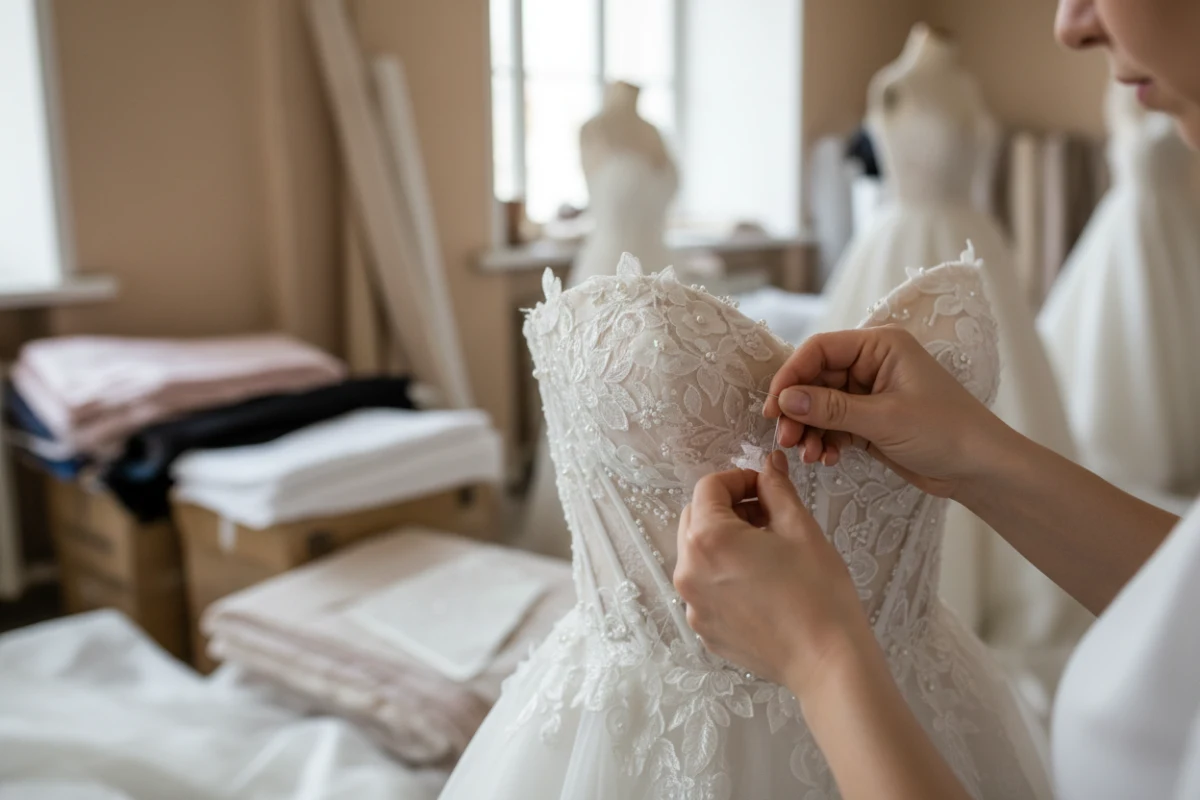 Hand-beaded lace appliques are carefully applied by skilled artisans during the sampling and production phases.
Phase 4: Scaling to Bulk Production with Consistent Quality Control
Once the master sample is signed off, the brand transitions into bulk wedding dress manufacturing. This phase requires rigorous quality control checkpoints at every single stage of assembly:
- Fabric Inspection: Checking raw textiles for weave inconsistencies, dye lot variations, and structural defects before cutting.
- Precision Cutting: Utilizing computerized or master-hand cutters to ensure every pattern piece is identical to the millimeter.
- Component Sewing: Stitching the internal bodice, structural boning, and outer layers together.
- Hand Craftsmanship: Attaching three-dimensional appliques, hand-beading, and custom embroidery.
- Final QA Check: Inspecting finished garments for dimensional accuracy, seam strength, zipper functionality, and loose threads.
Aligning with a trustworthy bridal wear production partner ensures that the 100th gown shipped is identical in quality and craftsmanship to the approved master prototype.
Key Criteria for Choosing the Right Bridal OEM Partner
Choosing the right partner can make or break a bridal collection. When vetting potential manufacturers, look beyond unit pricing and evaluate their holistic capabilities:
- Sourcing Network: Can they procure high-quality European laces or custom Japanese crepes?
- Capacity and MOQs (Minimum Order Quantities): Do they offer flexible batch sizes to support capsule collections, as well as the capacity to scale up for peak season orders?
- Craftsmanship and Experience: Do they have a proven track record of handling delicate fabrics like silk chiffon, and complex techniques like inner corset construction?
- Clear Communication: Look for partners that assign dedicated project managers to keep you updated throughout the sampling and production process.
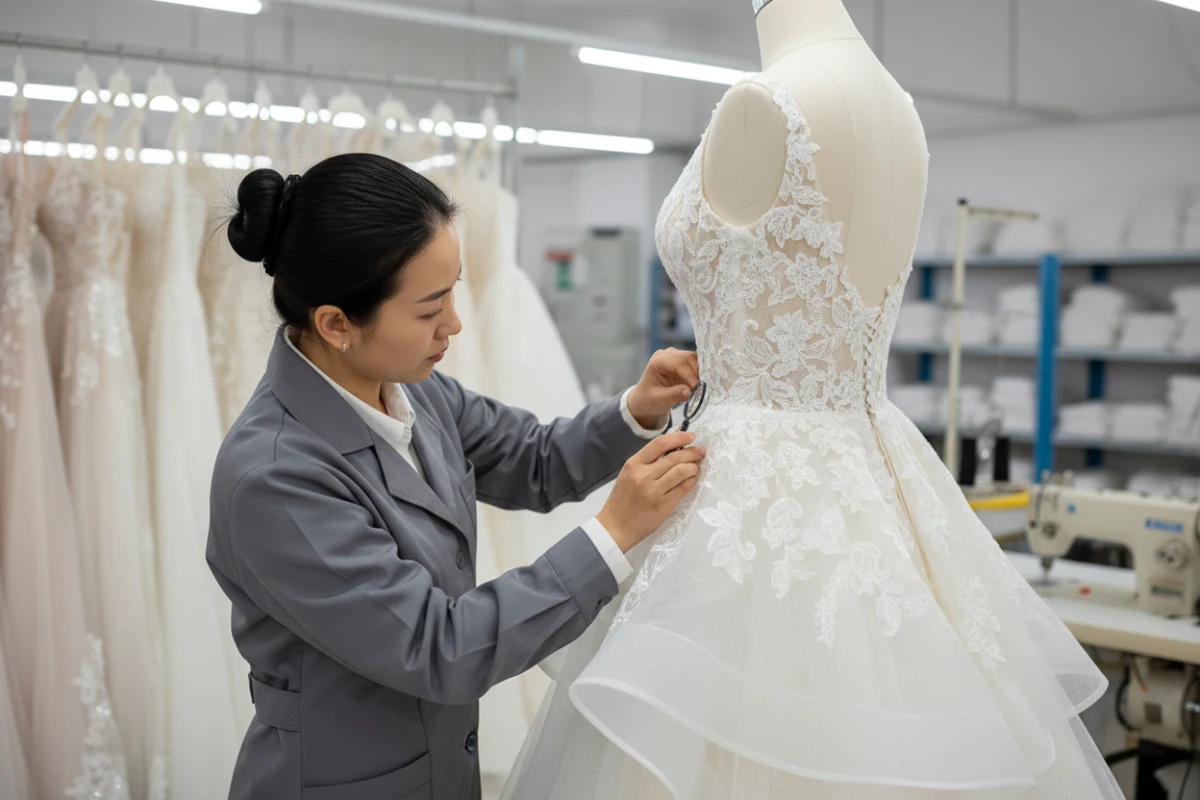 Rigorous quality control checkpoints ensure every dress produced meets elite global standards.
Choosing a highly skilled production partner ensures your business can deliver luxurious, durable, and breathtaking gowns that modern brides deserve.
If you are looking to launch or scale your bridal collection with a trusted manufacturing ally, look no further than Huasha's industry-leading production facilities. Let us help you streamline your supply chain and bring your designs to life with unparalleled artisan craftsmanship. Discuss Your OEM Project with our specialists today.