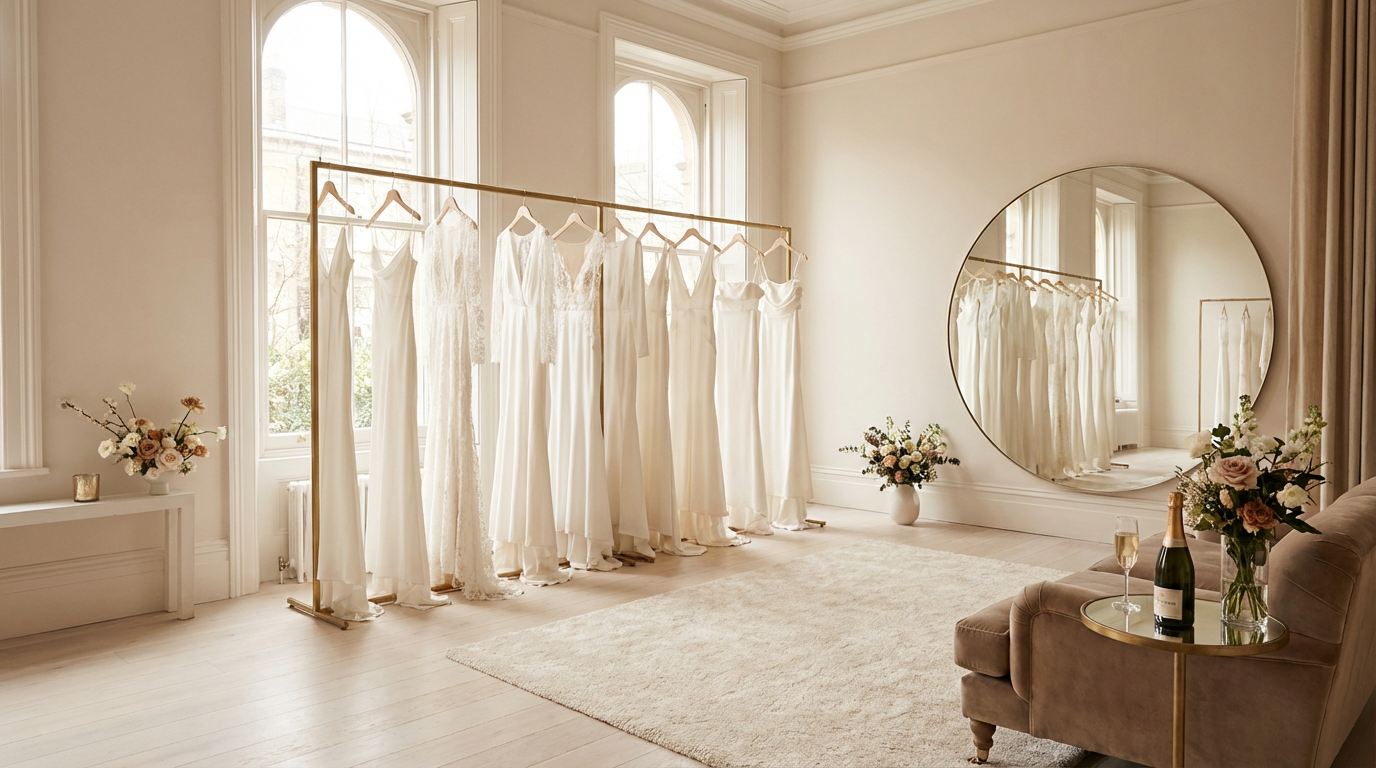
How to Build a More Profitable Bridal Lineup With Fewer Slow-Moving Styles
I’ve spent 18 years on the factory floor in Suzhou, and if there’s one thing I’ve learned from talking to hundreds of boutique owners in the States, it’s this: A beautiful gown that doesn't sell is just an expensive piece of decor.
I remember sitting in a boutique in Charleston a few years back. The owner, a brilliant woman with an eye for fashion, pointed to a rack of avant-garde, heavily beaded gowns. "They’re masterpieces," she whispered, "but they’ve been on the rail for ten months." That’s the heartbreak of the bridal business. You fall in love with a design, but your bank account pays the price when it doesn't move.
Today, I want to share the "factory-side" secrets to building a lineup that actually turns over. We’re going to talk about the 80/20 rule, the shift toward 'clean chic,' and how white-labeling is the secret weapon for your bottom line.
The Real Cost of the 'Beautiful' Unsold Gown
In the bridal world, we often talk about 'curating an aesthetic.' But as a manufacturing partner, I look at your racks as capital. If your average inventory turnover is less than 1.5x a year, you aren't just losing floor space; you’re losing the ability to reinvest in the trends that are actually making money now.
Slow-moving styles—what we call 'deadstock'—are usually the result of buying with the heart instead of the spreadsheet. In 2025, the 'value-driven' luxury trend is king. Brides are looking for quality, but they are also more practical. If a dress is too 'niche,' it stays on the rack. At Huasha Bridal, we’ve tracked the data across our global partners, and the styles that sit the longest are often those that prioritize 'runway shock value' over wearable fit.
Analyzing the Data: What Defines a Slow-Mover in 2025?
You need a '120-Day Review.' If a sample hasn't been requested for a fitting or sparked a serious inquiry within four months, it’s officially a red flag.
Currently, we are seeing a massive shift. The search volume for Basque waists has surged by over 300%. Meanwhile, overly heavy, traditional ballgowns with stiff crinoline are slowing down. If your inventory is still 40% heavy ballgowns, you’re likely feeling the squeeze.
The Profit-First Portfolio: The 80/20 Rule
I always advise my partners to follow a strict 80/20 procurement strategy:
- 80% Core Classics (The Bread and Butter): These are your high-turnover silhouettes. Think A-lines with modern twists, 'Clean Chic' crepe gowns, and the ever-reliable fit-and-flare. These are the styles where we focus on the feel of the fabric—like our 300gsm heavy stretch crepe that hugs the body without showing every line.
- 20% Trend Pieces (The Window Dressers): These are your 3D floral appliques, your modular designs with detachable sleeves, and your daring necklines. They bring people into the shop, but they aren't the ones paying the rent.
By focusing your bulk buying on the 80%, you ensure that your cash flow remains liquid.
The White-Label Solution: Protecting Your Margins
Here’s a secret many big brands don't want you to know: Boutique hopping is killing your margins. When you carry the same national brands as the shop three miles down the road, the bride will price-shop you.
This is where white-labeling (or ODM) comes in. At Huasha Bridal, we help boutiques create their own 'in-house' lines. When you source directly from our factory, you get:
- Exclusivity: No one can find that exact dress online or at a competitor's shop.
- Higher Margins: You aren't paying for a national brand's multi-million dollar marketing budget. You’re paying for the silk, the lace, and the craftsmanship.
- Brand Loyalty: The bride falls in love with your brand, not a label she can find anywhere else.
Why Fit and Fabric Quality are Your Best Salespeople
As a factory manager, I’m obsessed with SMV (Standard Minute Value) and AQL (Acceptable Quality Level). Why should you care? Because a dress that fits perfectly off the rack is a dress that sells itself.
Slow-moving inventory often happens because a dress looks good on the hanger but feels terrible on the bride. If the internal boning is too stiff or the lace is scratchy, she’s not buying it. We use a proprietary 'soft-structure' internal construction that provides support without the 'armor' feel. When a bride tries on a Huasha-made gown, she feels comfortable immediately. That’s how you increase your sell-through rate.
Strategic Procurement: How to Buy for Turnover
When you’re sourcing from China, the risk is often the MOQ (Minimum Order Quantity). You don't want to be forced to buy 50 pieces of a style you aren't sure about.
We’ve structured Huasha Bridal to be a strategic partner, not just a vendor. We offer flexible MOQs because we want you to test the waters. We’d rather you order five pieces that sell in a month than twenty pieces that sit for a year.
Conclusion: Turning Your Inventory into a Cash-Flow Engine
Building a profitable bridal lineup isn't about having the most dresses; it's about having the right dresses. Stop letting slow-moving styles eat your profits. Focus on the data, embrace the 'clean chic' movement, and consider the margin-protecting power of white-labeling.
Want to see how we build high-turnover collections?
Let’s hop on a WhatsApp video call. I’ll take you through our Suzhou showroom and show you the fabrics and fits that are currently flying off the racks in the US and Europe. No pressure, just a transparent look at how we can help you grow.
Contact us today to schedule your virtual factory tour.