How Bridal Boutiques Can Use Fabric and Craftsmanship to Support a Slow-Luxury Positioning
Let’s be honest: the bridal world has been a bit chaotic lately. Between the rise of ultra-fast-fashion wedding sites and the endless scroll of Instagram trends, many boutique owners I talk to feel like they’re stuck in a race to the bottom on price. But here’s the good news—there is a massive shift happening. We call it Slow Luxury.
Modern brides, especially those in the US market, are getting tired of the 'disposable' feel of mass-produced gowns. They want something that feels substantial. They want to touch a fabric and feel the heritage behind it. As someone who has spent the last 18 years on the factory floors here in Suzhou, I’ve seen firsthand how the right fabric and a bit of 'invisible' craftsmanship can turn a struggling boutique into a high-end destination.
Today, I want to pull back the curtain and show you how to use these technical details to justify your premium pricing and build a brand that stands the test of time.
1. The Foundation: Fabric is Your Silent Salesperson
When a bride walks into your shop, her first interaction isn't with your sales pitch—it's with the fabric. If she touches a gown and it feels like stiff, scratchy polyester, the 'luxury' illusion is broken instantly.
To support a slow-luxury positioning, you need to move toward what we call 'Quiet Luxury' materials. At Huasha Bridal, we’ve seen a huge surge in demand for:
- Heavyweight Silk Mikado: This isn't your average shiny satin. True luxury Mikado has a structured, architectural drape and a subtle, matte luster. It feels expensive because it is substantial.
- Premium Crepe: Look for high-GSM (grams per square meter) crepe. It should have enough weight to smooth over the body without needing five layers of shapewear.
- Authentic Silk Luster: Even in synthetic blends, the way the light hits the yarn matters. We focus on sourcing yarns that mimic the soft, organic glow of natural silk rather than the harsh 'plastic' shine of cheap alternatives.
My advice? Keep a 'fabric library' in your boutique. When you can show a bride the difference between a standard lace and a hand-corded French lace, you aren't just selling a dress; you're educating her on value.
2. The Art of the Invisible: Craftsmanship That Justifies the Price Tag
Slow luxury is often about what you can't see at first glance. It’s the internal architecture that makes a bride feel secure and beautiful.
I remember a partner of ours in New York who was losing sales to a nearby discount outlet. We worked with her to develop a white-label line with superior internal construction. We used 12-16 high-quality bones in the bodice instead of the standard 4-6. We implemented inner waist stay tapes to take the weight off the shoulders.
Suddenly, her brides weren't just looking at the lace; they were talking about how the dress 'held' them. That is the power of craftsmanship.
Key Details to Look For:
- French Seams: No raw edges inside the gown. It’s a mark of a couture-level finish.
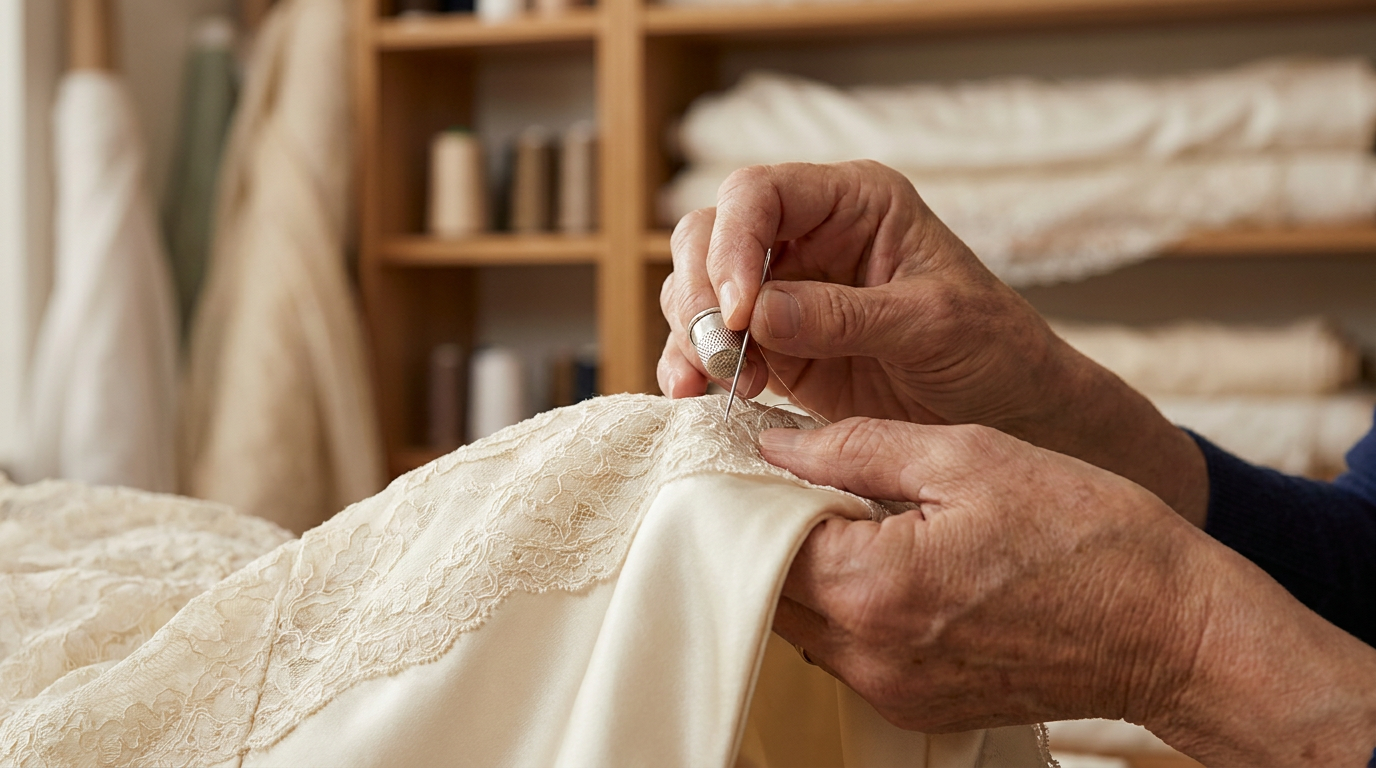
- Hand-Sewn Appliqués: Machine-stitched lace looks flat. Hand-placed and hand-stitched lace has dimension and life.
- Horsehair Braids: Not the animal kind! This is the stiffening tape at the hem that gives a skirt that beautiful, rolling movement. Cheap gowns skip this; luxury gowns double down on it.
3. From Factory to Floor: Why Your Partner Matters
You can’t have a slow-luxury brand if your supply chain is a mystery. In my 18 years managing production at Huasha Bridal, I’ve learned that the biggest risk for a boutique is a 'black box' manufacturer.
If you don't know who is sewing your dresses or where the lace is sourced, you can’t tell a compelling story to your bride. We position ourselves as a strategic manufacturing partner, not just a factory. This means transparency. When we work with boutiques on ODM (Original Design Manufacturing) projects, we provide the technical specs, the fabric origins, and the quality control reports (AQL standards).
This transparency allows you to tell your brides: "This gown was crafted by a team with nearly two decades of expertise, using ethically sourced materials and hand-finished details." That story is worth thousands of dollars in brand equity.
4. Marketing the Craft: Shifting the Conversation
Stop talking about price and start talking about provenance.
Instead of saying, "This dress is $3,000," try saying, "The hand-embroidery on this bodice took a single artisan 40 hours to complete." Instead of "It’s a ballgown," try "The internal corsetry is designed to provide custom-level support without the need for additional undergarments."
At Huasha Bridal, we love it when our partners hop on a WhatsApp video call with us. We show them the beadwork in progress. We show them the QC team checking every inch of a train. Use that! Show your brides behind-the-scenes clips of the craftsmanship. It builds a bridge of trust that no mass-market website can ever replicate.
Conclusion: The Long Game
Slow luxury isn't a trend; it's a return to what bridal should be. By focusing on the tactile quality of your fabrics and the technical integrity of your gowns, you insulate your business from the 'race to the bottom.'
If you’re looking to elevate your boutique’s offering with gowns that actually live up to the 'luxury' label, let’s talk. At Huasha Bridal, we specialize in helping boutiques like yours create exclusive, high-quality collections that brides will cherish.
Ready to see the difference for yourself? Reach out for a digital tour of our Suzhou showroom. Let’s build something beautiful together.