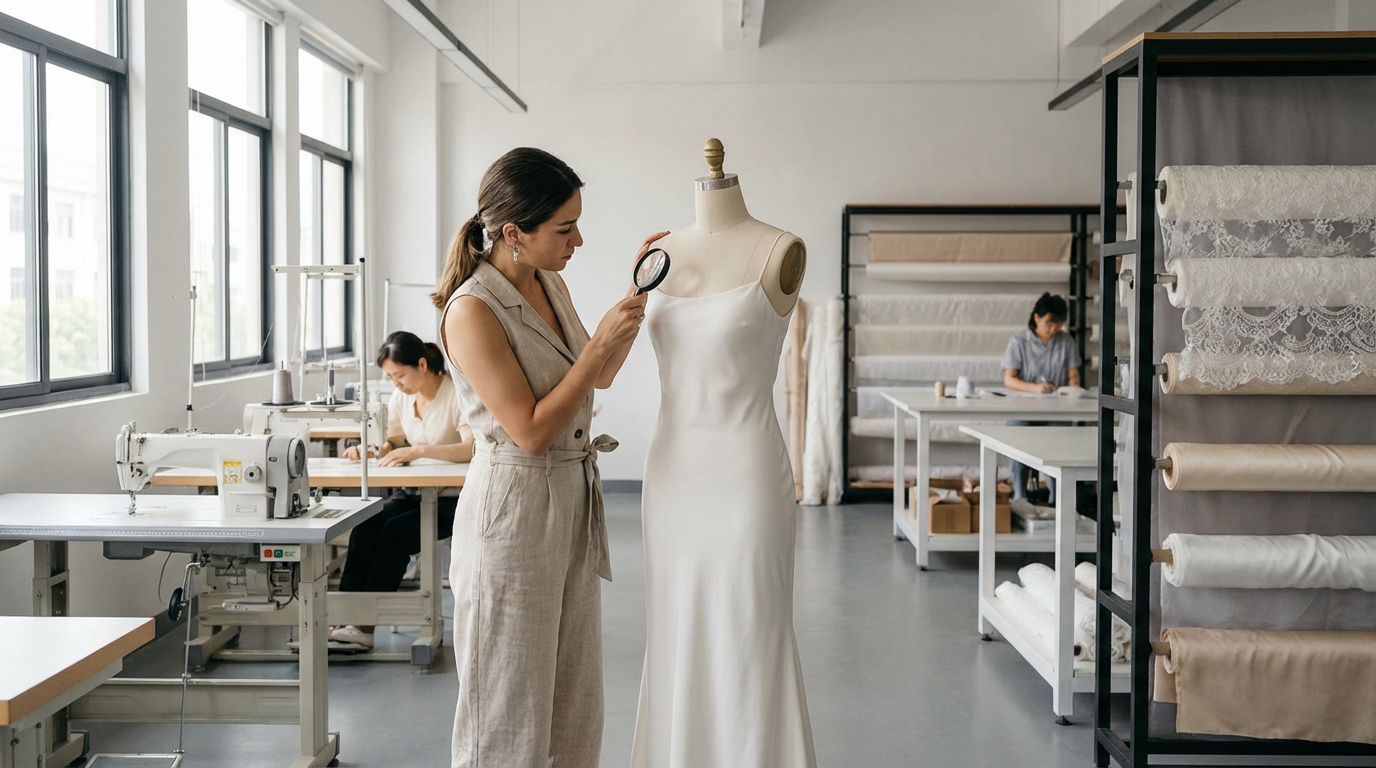
Top Bridal Manufacturers in China for Private Label & ODM (2026 Guide)\n\nHey there. If you're reading this, you've likely had that 2 AM panic—the one where you're staring at your inventory and wondering if your current supplier is actually going to deliver those 'Minimalist Luxury' gowns on time, or if the lace is going to look like the sample you fell in love with six months ago. I've been in the bridal industry for 18 years, and I’ve seen it all. From the chaotic workshops in the early 2000s to the high-tech, design-forward hubs we manage today here in Suzhou, the landscape has changed. But one thing remains the same: your brand’s reputation lives and dies by the quality of your manufacturing partner.\n\nIn 2026, the game isn't just about finding the lowest price. It's about 'Resilience over Cost.' With shifting trade policies and a more discerning bride who cares about sustainability, you need a partner who acts as an extension of your own team. At Huasha Bridal, we’ve spent nearly two decades turning complex production needs into clear, reliable solutions. Here is my insider’s guide on how to navigate the world of Chinese bridal manufacturing for your private label or ODM brand this year.\n\n## The 2026 Bridal Landscape: Why Sourcing Strategy is Changing\n\nThe bridal market in 2026 is defined by a shift toward 'Safe Sourcing.' Buyers are no longer just looking for a factory; they are looking for a strategic partner. We’re seeing a massive move toward transparency. It’s no longer enough to say a dress is 'made in China.' Boutique owners want to know about the fiber content, the OEKO-TEX certification of the tulle, and the ethical standards of the factory floor. \n\nAt Huasha, we’ve embraced this by implementing digital 'virtual factory tours.' I often find myself on a WhatsApp video call at 10 PM local time, walking a boutique owner in New York through our stitching lines or showing them the exact roll of recycled crepe we’re using for their collection. This level of access is the new standard. If a manufacturer hides behind vague emails, that’s your first red flag.\n\n## Suzhou vs. Guangdong: Choosing the Right Manufacturing Cluster\n\nWhen you look at China, you’ll mostly find two major hubs: Suzhou and Guangdong (Chaozhou/Guangzhou). While Guangdong is fantastic for mass-market, high-volume evening wear, Suzhou is the 'Silicon Valley' of mid-to-high-end bridal. \n\nSuzhou is where the artistry lives. The intricate lace placement, the structural integrity of a supportive bodice, and the delicate hand-beading that makes a gown look like it costs $5,000—that is the Suzhou specialty. Our factory is rooted here because the local supply chain for high-end bridal fabrics and specialized labor is unmatched globally. When you source from a Suzhou-based partner like Huasha, you’re tapping into centuries of textile heritage combined with modern industrial efficiency.\n\n## Vetting for Private Label: Red Flags and Green Lights\n\nChoosing a private label partner is like a marriage—you want to know what they’re like when things get stressful. Here are the 'Green Lights' I tell every procurement manager to look for:\n\n1. The Sample Pathway: A professional factory should have a clear, documented process from your sketch or inspiration photo to the final prototype. If they can't explain their pattern-making logic, they aren't an ODM specialist; they're just a sewing shop.\n2. US/EU Sizing Standards: Many factories struggle with Western fit. Ask them specifically about their 'fit models' and whether they use US standard sizing blocks. At Huasha, we’ve refined our blocks over 18 years to ensure that a Size 10 fits a Western bride exactly as expected, reducing your alteration costs.\n3. IP Protection: This is huge. If you’re sending original designs for ODM, you need a manufacturer that respects intellectual property. We sign NDAs with our strategic partners because we know that your unique design is your competitive edge.\n\nRed Flags? Be wary of factories that promise 'no MOQ' on everything or those that don't have a dedicated QC team. If the person selling you the dress is also the one 'checking' the quality, you have a problem.\n\n## The ODM Design Edge: Minimalism and Eco-Luxury\n\nFor the 2026 season, the 'Minimalist Luxury' trend is dominating. This sounds easy, but it’s actually harder to manufacture. There’s no lace to hide a crooked seam or a poorly balanced grainline. Clean lines require absolute precision. \n\nWe’ve invested heavily in 3D prototyping to help our ODM clients visualize these clean silhouettes before we ever cut fabric. This saves weeks in the sampling phase. Additionally, we are seeing a surge in demand for sustainable materials. We’ve curated a library of recycled tulles and eco-certified satins that don't sacrifice that 'buttery' hand-feel brides crave. If your manufacturer isn't talking to you about fabric sustainability yet, they’re already behind the curve.\n\n## Quality Control: The 'No Surprises' Philosophy\n\nQuality control shouldn't happen at the end; it should be baked into every step. We use a 7-checkpoint system at Huasha Bridal:\n1. Fabric & Lace Inspection: Checking for snags or dye-lot variations before cutting.\n2. Pattern Verification: Ensuring the CAD output matches the design specs.\n3. Cutting Precision: Using automated systems for consistency.\n4. Internal Structure Check: Verifying the boning and cups are placed for maximum support.\n5. Lace/Beading Placement: Ensuring symmetry—a key marker of high-end manufacturing.\n6. Final Stitching & Finishing: Checking for loose threads and seam strength.\n7. Measurement Audit: Every gown is measured against the spec sheet before packing.\n\nThis 'No Surprises' approach is why we’ve maintained a near-zero return rate for our long-term boutique partners.\n\n## Risk Management: Navigating Tariffs and Logistics\n\nI know the headlines about trade tensions are scary. But a seasoned partner knows how to navigate this. We provide transparent documentation for all shipments and work with logistics experts who understand the nuances of US and EU import duties. We also focus on 'Repeatability.' The biggest risk in bridal isn't the first sample; it's whether the 50th dress in the bulk order looks exactly like the first. Our structured management system ensures that every reorder is as perfect as the original prototype.\n\n## Conclusion: Finding Your Strategic Partner\n\nAt the end of the day, your manufacturing partner should make your life easier, not harder. You should be focused on marketing and your brides, not worrying if a shipment is stuck or if the zippers are going to break. \n\nIf you’re ready to move beyond 'just another vendor' and want a strategic manufacturing partner who understands the US market, let’s talk. I’d love to take you on a virtual tour of our Suzhou facility and show you how we can bring your 2026 collection to life. At Huasha Bridal, we turn your complex needs into reliable solutions. Reach out via WhatsApp or email—let’s build something beautiful together.