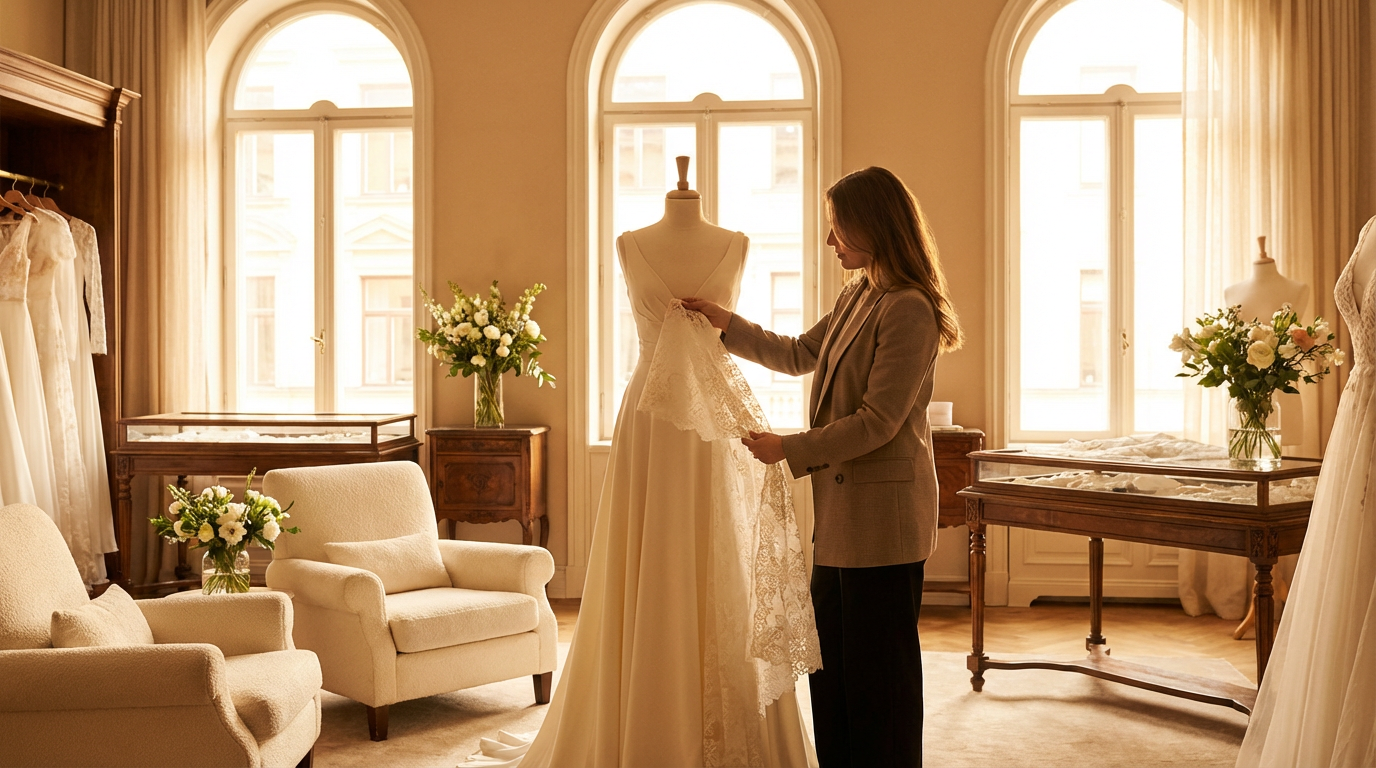
White Label vs. ODM: Which is Right for Your Bridal Boutique?
Let’s get real for a second. You’re sitting in your boutique, surrounded by $3,000 gowns, and yet your bank account doesn't always reflect the hustle. You’re dealing with 'showrooming'—where brides try on your expensive designer labels and then spend their afternoon hunting for the same dress cheaper online. It’s exhausting, right?
I’ve spent 18 years on the factory floors here in Suzhou, and I’ve seen this story play out a thousand times. The boutiques that are actually winning—the ones expanding to second locations and launching their own lines—have stopped relying solely on big-name designers. Instead, they’ve mastered the art of the Private Label.
But here’s where the confusion starts. Should you go with White Label or ODM? Both get you away from the price-comparison trap, but they serve very different goals. Let’s break it down like we’re grabbing a coffee together.
The "Designer Brand" Trap: Why Your Margins are Shrinking
When you carry a major designer brand, you’re paying for their marketing, their runway shows, and their fancy New York offices. That’s why your markup is capped. Usually, you’re lucky to see a 2x or 2.5x return.
With a private label approach—whether White Label or ODM—you’re looking at 3x, 4x, or even 5x margins. Why? Because you’re buying direct from the source (like us at Huasha Bridal) and selling your own brand’s value.
White Label: The "Plug and Play" Solution
Think of White Label as the "ready-to-wear" of the manufacturing world. We design a collection of stunning gowns based on current trends—think 40momme silk crepe, intricate 3D floral appliqués, and that structured internal boning that brides crave—and we keep them in our catalog.
How it works:
You look at our line sheet, pick the styles you love, and we sew your boutique's label into the neck.
The Pros:
- Speed to Market: You can have a new collection on your racks in 8-10 weeks.
- Lower Risk: You’re picking proven designs that we’ve already perfected. The fit is tested, the fabric is sourced, and the "kinks" are worked out.
- Low MOQs: Since we already have the patterns and materials, you can often start with just a handful of pieces.
The Cons:
- Less Exclusivity: Another boutique across the country could technically buy the same dress. (Though at Huasha, we try to manage regional exclusivity to protect our partners).
ODM: Building Your Signature Empire
ODM (Original Design Manufacturing) is for the visionary. This is for the boutique owner who says, "I love this silhouette, but I want it with a deeper V-neck, a 2-meter cathedral train, and this specific French Chantilly lace I saw in a dream."
How it works:
You provide the inspiration—sketches, photos, or even just a mood board. We turn those ideas into technical specs, create a unique pattern just for you, and produce a "Signature Collection" that exists nowhere else on earth.
The Pros:
- Total Exclusivity: You own the look. No one can price-match you because no one else has the dress.
- Brand Identity: You’re not just a shop; you’re a designer. This builds massive equity in your business.
- Custom Fit: You can specify exactly how much structure goes into the bodice or the weight of the lining.
The Cons:
- Longer Lead Times: We need time for sampling and revisions. Think 12-16 weeks.
- Higher Investment: There’s more back-and-forth, and usually, the MOQs are slightly higher because we’re sourcing unique materials just for you.
The Showdown: Which One Wins for You?
If you’re just starting to dip your toes into private labeling, White Label is your best friend. It’s the fastest way to boost your margins without losing sleep over design specs. You can test what your brides like—do they want minimalist Mikado or boho lace?
However, if you’ve already established a loyal following and you want to stop the "shop hopping" for good, ODM is the move. When a bride falls in love with a dress that only exists in your store, the sale is yours to lose.
Why Suzhou (and Huasha) is Your Secret Weapon
I’ve been managing production in Suzhou for nearly two decades. People often ask me, "Why China?" The truth is, the supply chain here is unparalleled. Within a 5-mile radius of our factory, I can source the finest zippers, the softest tulles, and the most skilled hand-beaders in the world.
At Huasha Bridal, we don't just take orders. We act as your strategic partner. If you send us an ODM sketch that we know won't hang right in real life, we’ll tell you. We’ll suggest a different boning structure or a more stable fabric. We’re here to make sure your brand succeeds, because if you don't grow, we don't grow.
Making the Move: Your 3-Step Action Plan
- Audit Your Sales: Look at your top 5 best-selling silhouettes from the last year. Are they A-lines? Mermaids?
- Start Small: Pick 3 White Label styles that fit those silhouettes. Re-brand them as your "Boutique Essentials."
- Scale to ODM: Once those sell, take the feedback (e.g., "Brides loved the fit but wanted more sparkle") and let’s design 2 exclusive ODM pieces that address exactly what your local market is asking for.
Ready to see what’s possible? I’d love to show you around the factory. We can hop on a WhatsApp video call, and I’ll show you the quality of our lace and the precision of our stitching in real-time.
Let’s turn those complex production needs into a clear, reliable solution. Your margins will thank you.